Hope
By Ariel Dorfman
What I am asking is
how can it be
that a father's
joy
a mother's
joy
is knowing
that they
that they are still
torturing
their son?
Which means
that he was alive
five months later
and our greatest
hope
will be to find out
next year
that they're still torturing him
eight months later
_______
From Last Waltz in Santiago, p. 8.
Friday, July 6, 2007
Torture Perverts Even Hope

Thursday, July 5, 2007
Eine Vernehmung By Any Other Name...
 Americans who defend their President's embrace of "enhanced interrogation" either take a hard-ass approach--"hang the bastards by their balls" (an actual quote, by the way, taken from a comment by one PShannon, March 20, 2007, on the vile blog NewsBusters)--or a more sly doublespeak approach that righteously protests the identification of "enhanced interrogation techniques" with "torture." The bad guys torture, this line goes. Al Qaeda tortures. Saddam Hussein tortured. The Nazis tortured. We Americans--we don't torture. We use enhanced interrogation techniques.
A recent column in Andrew Sullivan's "The Daily Dish" puts the lie to this bit of sophistry. Sullivan notes that just before WWII erupted, the Nazis dreamed up a kind of interrogation they called Vershaefte Vernehmung. It was designed to leave no visible marks on the bodies of its victims, and included techniques such as starvation, sleep deprivation, stress positions and exhaustion exercises, isolation, and dunking in frigid water. If these interrogatory techniques sound familiar, they should. Vershaefte Vernehmung, after all, translates as "enhanced," "intensified," or "sharpened" interrogation.
The next time you hear somebody claim that US-approved "enhanced interrogation" isn't torture, tell them about Vershaefte Vernehmung and ask them if they're really comfortable endorsing techniques used by Nazis.
 torture, enhanced interrogation, human rights, detainees, gitmo, cheney, bush
Wednesday, July 4, 2007
A July 4th Reminder to the Pathetic Moral Dwarves Who Run the United States
 The Founding Fathers weren't the demi-gods American mythology has made them. They were human, with their full share of personal warts and wrinkles and generational blindspots. But one thing's for damn sure: they took honor seriously. If Washington or Adams or Jefferson could see how Bush and Cheney and Rumsfeld have embraced euphemism-disguised torture as national policy, they'd vomit.
So should we all.
Robert F. Kennedy Jr. published a wonderful essay in the LA Times back in December 2005, well worth re-reading on this Independence Day, that reminds us of something we ought not forget. During the War of Independence, General Washington, repulsed by the atrocities the British Army was inflicting on soldiers and civilians alike, made the deliberate decision to treat captured British soldiers and Hessian mercenaries decently. "Treat them with humanity," Washington ordered, "and let them have no reason to Complain of our Copying the brutal example of the British Army in their treatment of our unfortunate brethren."
One Colonel Charles Stuart, stationed in the colonies during the war and witness to the torture and ill-use practiced by the army in which he served, reflected on its backwash in a letter to his father: "Wherever our armies have marched, wherever they have encamped, every species of barbarity has been executed. We planted an irrevocable hatred wherever we went, which neither time nor measure will be able to eradicate."
If honor isn't a motive for Bush, Cheney, Ltd., you'd think national self-interest would be. But apparently the moral deafness of American leaders is matched by their stupidity.
Happy fourth of July. And in between hot dogs and beer and fireworks, pause to consider whether the current national policy of torture is planting an irrevocable hatred of all things American around the world "which neither time nor measure will be able to eradicate." And if, like Bush and Cheney, you don't give a damn, pause to think about the kind of future the policy is bequeathing to your kids.
________
Photo: July 4th parade, Copenhagen, Denmark  torture, human rights, bush, cheney, gitmo
 fourth of july, july fourth, july 4th
Tuesday, July 3, 2007
Torture in the News
 Lead Story
U.S. Scares Europeans (& young Americans)
For the 12th time in a year, a significant percentage of polled Europeans see the U.S. as the single biggest threat to world stability.
The latest survey, conducted last month by Harris Research for London Financial Times, revealed that 32% of respondents in Spain, England, Germany, France, and Italy believe that the U.S. is more dangerous than China, Iran, Iraq, North Korea, and Russia. Spain led the pack with 46% giving the U.S. the number one spot.
An idential poll conducted in the States revealed that 35% of American youth in the 16 to 24 age range agree.

Reasons for the high rating included the on-going wars in Iraq and Afghanistan and the torture and denial of due process for detainees in U.S. custody. This comes in the wake of revelations that the CIA tried to silence European Union objections to "extraordinary renditions" taking place from European airports and in European airspace.
Other News
- A military judge (no less) drops charges against Omar Khadr, held prisoner at Gitmo since he was 15 years old. A pissed-off Pentagon requests a review of the decision.
- Trinidad journalist Basil Ince offers a good reflection on Gitmo as the "Achilles heel" of U.S. foreign policy.
- Nat Hentoff on President Bush, U.S. generals, an ex-CIA director, and torture.
- The ACLU urges Congress to create an "independent and bipartisan" commission to investigate torture and abuse of detainees in U.S. custody.
- UK Telegraph's Tim Shipman reports that even supporters of Vice President Cheney admit he's become the world's "comic book villain" because of his torture policies and contempt for process. An unrepentant Cheney couldn't care less.
- Tortured Sri Lankan youth tries to kill himself--take note, everyone who believes that torture stops at the torture chamber.
- Chen Guangcheng, blind Chinese pro-life activist, may be close to death after imprisonment and torture.

- Ghanian columnist Prize F. W. McApreko asks "Who cares about torture, ill-treatment, and degrading punishment?"
- And UK Guardian commentator Peter Thatchell wonders why the European Union plans to roll out the red carpet at an upcoming summit for Zimbabwe's head torturer Robert Mugabe.

Monday, July 2, 2007
Torture: A Perverse Mysticism
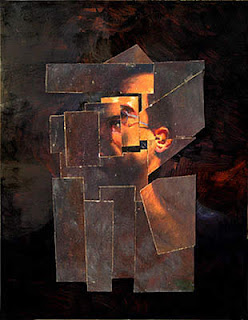 Here's the thing about torture: it's a perversion, a caricature, a horrific parody, of reality. It takes the ordinary world in which you and I live and it turns it upside down. In the process, it's not only human beings that get tortured. Intimacy gets tortured too. So does language. Truth. Morality. Democracy. The natural world. Collective memory.
Shockingly, the noblest spiritual aspirations of humans, found in spiritual traditions across the globe, are likewise parodied and perverted by torture. Torture has its own perverse mysticism.
Mystical traditions encourage practitioners to strip away illusion and self-deception in order to discover who they really are. The Trappist monk Thomas Merton, for example, distinguished in his writings on mysticism between the "true" self and the "false" self. The false self, Merton said, is composed of layers of cultural conditioning, subjectivisms, temperamental dispositions, egoisms, habits, and social and personal delusions that we frequently associate with the word "personality." Personality, who we are on the surface, is obviously important. But we ought not to identify ourselves totally with it. Underneath it, insists Merton, is the true self: the likeness of the Divine with which we're born, and which constitutes our real identity. This is who we essentially are, he says, although our grasp of this truth is all too frequently blocked because we fail to dig deeper in our self-understanding than personality.
The distinction between true and false self is embraced to one extent or another by all mystical traditions. In order to help aspirants liberate themselves from delusion, mystical schools teach various spiritual disciplines, all of which aim at the annihilation of the false self--or "spiritual poverty," as it's sometimes called--so that awareness of the true self can be attained. The various yogas, meditative and contemplative techniques, solitude and silence, prayerful service to others: these are some of the methods by which Buddhists, Hindus, Taoists, Hassids, Christians, and Sufis spiritually discipline themselves. Moreover, most mystical traditions stress the importance of gurus--teachers or mentors. Spiritual discipline or ascesis undertaken without guidance is cautioned against as useless or even harmful.
The twentieth-century French mystic Simone Weil calls the disciplined spiritual annihilation of false self "decreation." Decreation is the process of making something created (the contingent personality) pass into the uncreated (the innate likeness of eternal God). She contrasts it with "destruction," the process of making something created pass into "nothingness," and calls it a "blameworthy substitute" for decreation. By "nothingness," Weil seems to mean the reduction of a human being into the status of an inert object. This can be done most obviously through killing, which instantly transforms a person into a corpse-thing. But it can also be done by torture. Torture is a destructive parody of decreation.
In previous posts (here, here, here, here, and here), I've explored the ways in which torture aims at the "malformation" of its victims. The torturer is a perverse spiritual guide or guru whose goal is to lead the torture victim to "truth" and "freedom." "Just tell us what you know. Unburden yourself. Free yourself from the secrets that are causing you so much grief." The "ascesis" through which this perverse freedom is attained--an ascesis in which the torturer-guru is a master--is physical and psychological torment: the brutal stripping away of the self, layer by layer, until the victim loses all sense of time and place, self-identity, trust in other humans and in existence itself. "There is no God, no you, no way out--no liberation--except total oblivion."
Step by step, the victim-initiate is led deeper into the mystery of torture, ever closer to that vanishing point in which the self destructs and is replaced by nothingness. The torturer-guru is too experienced to rush things. He knows that the spiritual discipline he practices must proceed gradually, lest it be too much too soon for the victim. Better to destruct by killing the soul than the body. Body death is clumsy. But soul-death--ah, soul-death, utter destruction: this perverse mockery of the mystical annihilation of self is the masterpiece toward which he aims. So with every new "interrogation," the pain is ratcheted up a bit until eventually all that's left is a human caricature, a shell, a nothingness, an unself.
"You're a fucking piece of shit. You're nothing. You're dead." The mantra of the torturer, proclaiming the nirvana of the destroyed, the destiny of the tortured.
_______
Merton speaks about true and false self throughout his entire corpus. A good introduction is James Martin's recent Becoming Who You Are: Insights on the True Self from Thomas Merton and Other Saints. Weil discusses decreation and destruction especially in Grace and Gravity. Photo credit: Davis Lisboa, Fragmented Self Portrait, 2000. www.davislisboa.com
Saturday, June 30, 2007
U.S. Supreme Court Justice Thinks the Scales of Justice Tip in Favor of Torture
 For pity's sake. How much longer will the people of the United States of America continue to tolerate the suited thugs that run their government and the gowned thugs that claim to dispense justice?!*
Antonin Scalia, Associate Justice of the Supreme Court, the highest and last court of appeal in the land, got into a revealing verbal scuffle with a Canadian judge at a recent Ottawa conference. During a panel on terrorism, torture, and the law, the Canadian judge quipped: "Thankfully, security agencies in all our countries do not subscribe to the mantra 'What would Jack Bauer do?'" (This, of course, refers to the hero of the popular television show 24. Agent Jack Bauer regularly tortures bad guys to save the U.S. from imminent disaster. The show could just as well be titled Ticking Bomb.)
Okay. To be honest, the Canadian judge's observation (although true enough) was probably also intended to provoke Scalia by criticizing the uber-conservative agenda he pushes on the bench. But does the good Justice rise above the dig? Nope. Instead, he incredibly defends Bauer's MO of torturing terrorists week in and week out. "Jack Bauer saved Los Angeles," Scalia retorted. "He saved thousands of lives. Are you going to convict Jack Bauer [for torturing]?" Scalia asked this question of his fellow jurists, but then (true to form) jumped in with his own answer. "I don't think so," he said. "So the question is really whether we believe in these absolutes [for example, right to a jury trial]. And ought we to believe in these absolutes."
And so ends Torture Awareness Month, with an Associate Justice of the Supreme Court declaring that torture, if done under the "right" conditions and for the "right" reasons, ought not to be criminal. In fact, in the best Hollywood style, torture's downright heroic.
Holy Bill of Rights, Batman!
_______
*I don't mean to imply that all suited politicians and gowned jurists in the States are thugs. It just seems that, lately, many of them are--especially the ones in high places.
Friday, June 29, 2007
Torture Awareness Month Ends, and the Movers and Shakers Couldn't Care Less
 Tomorrow is the final day of June, designated by the Torture Abolition and Survivor Support Coalition International and Amnesty International as Torture Awareness Month. Embedded within the month (June 26) was the UN-appointed International Day in Support of Victims and Survivors of Torture.
Computer searches for references over the past 30 days to "torture awareness month" from major U.S. newspapers and heavily trafficked high-end blogs reveal just how much of a shit was given:
Baltimore Sun: 0 references
Boston Globe: 0 references
Chicago Tribune: 0 references
Christian Science Monitor: 0 references
Los Angeles Times: 0 references
Miami Herald: 0 references
New York Times: 0 references
Seattle Times: 0 references
Wall Street Journal: 0 references
Washington Post: 0 references
Okay. We expect silence like this from conventional media. That's why we have progressive bloggers to fill in the gaps. So here are some data from a random selection of big box left-leaning blogs:
Boing Boing: 0 references
Crooks & Liars: 0 references
Daily Kos: 0 references
Majikthise: 0 references (although Lindsay has been mourning the tragic loss of her father this week and hence not posting)
Pandagon: 0 references
The Thinking Blog: 0 references
Think Progress: 0 references (although two very good postings on torture-related news)
But there were a few organizations (almost all of them religious) that took Torture Awareness Month with the gravity it deserves. Kudos to organizations such as Pax Christi, Pace e bene, the Presbyterian Church USA, the Santa Clara Council of Churches, and the hundreds of low-end, small box bloggers who remembered and witnessed. You can get a good idea of who they are by googling "torture awareness month." They may be tiny blips on the blogosphere radar screen, but they're keepin' it real.
By the way: how many people do you reckon were tortured in the time it took to read this post? I dunno, because figures are obviously hard to get. But at least one or two is a safe bet, don't you think?
The Torturer Speaks
"Torture is the most ancient of the fine arts, older than the so-called art of love, and certainly richer and more varied. The art of love is nothing but a dozen positions and a couple of dozen refinements, but torture has a thousand varieties. All animals can couple, but man is the only animal that tortures. The essential ingredient of torture could not be more simple: all you need is a collective, constituted group operating on a man in isolation. The group, as we know, is stronger than the individual, and torture is the first way of proving it. Torture is also the first of the experimental sciences. All it calls for is a pair of bare hands and a gang to hold the patient down and assist in the experiment. Furthermore it is an art which, like all the primitive arts, dance, song, story-telling, poetry, requires nothing but the body. As for the art of love, well, the zones of pleasure are very much fewer than the zones of pain, and pain is more intense and can last much longer. Pleasure is not the opposite of pain; it is a different thing altogether, poorer and more limited."
This excerpt (pp. 299-300) is from the sadly-neglected novel Incognito by Romanian author Petru Dumitriu. Dumitriu, who experienced WWII and the post-war Soviet bloc firsthand, published the novel in 1962. His novel is semi-autobiographical.
The speaker is one Major Bulz, described by the novel's protagonist as "the only torturer I have known at all well." Major Bulz's left hand is deformed: webbed and fused fingers. "He hated the world for having given him a hand like that."
In just a few lines, Dumitriu deftly captures some of the characteristic features of both torture and torturers: the utter simplicity of torture as an "art," the multiple ways to cause pain, the torturer's grudge against the world that fuels his activities in the torture chamber.
Thursday, June 28, 2007
Torture in the News
 Top Story
President Blows Off Students Expressing Concern About Torture
"We do not want America to represent torture. We urge you to do all in your power to stop violations of the human rights of detainees, to cease illegal renditions, and to apply the Geneva Convention to all detainees, including those designated enemy combatants." This from a letter presented to the President on Monday by 50 of the nation's brightest high school seniors. The students, selected as members of this year's national Presidential Scholars, handed the statement to President Bush during a photo op in the East Room. Bush, apparently taken by surprise, glanced through the letter and then dismissed it with the familiar mantra that "the United States does not torture and that we value human rights." (For more on "the United States does not torture," see the bottom story in this segment of Torture in the News.)
Three of the kids explain why they confronted the President in this CNN interview. Wow!
Also in the News
Torture Continues in Nepal, Zimbabwe, and the Ukraine
In a report released Tuesday, Advocacy Forum Nepal, a human rights NGO, announced that the Nepalese Army and Nepalese Maoist rebels are equal opportunity torturers. The AFN has recorded over 1,300 new cases since April 2006. In that same time period, nearly 28% of detainees claim they were tortured, with minors suffering the worse abuse.
According to the Zimbabwe Human Rights Forum, torture is on the upswing for the third straight year in Zimbabwe, with 300 alleged cases occuring so far this year. Along with Angola, Zimbabwe is the only Southern African Development Community (SADC) that refuses to sign the International Convention on Torture. There are 14 nations in the SADC.
You most definitely don't want to be arrested in the Ukraine. According to reports filed by the UN Committee Against Torture, the Council of Europe, and the International Helsinki Federation for Human Rights, Ukrainians are regularly subjected to torture from the moment of their arrest to their subsequent conviction and imprisonment. As detainees, they're tortured to elicit "confessions." As convicted criminals, they're tortured just because guards enjoy ass-kicking.
UK Attorney General Calls for Investigation
Lord Goldsmith, the UK Attorney General who will soon vacate his post, earlier this week called for an inquiry into allegations that British troops stationed in Iraq have tortured detainees. Goldsmith's call comes on the heels of the acquittal of members of the Queen's Lancashire Regiment accused of prisoner abuse.
More Revelations of Cheney's Involvement in Prisoner Abuse
In Part II of their series on the Vice (and I do mean vice) Presidency of Dick Cheney, Barton Gellman and Jo Becker chronicle Cheney's hardline defense of torture in the war on terror that led to the administration's notorious distinction between illegal torture and permissible cruelty in the treatment of detainees.
(Hat tip to Kim) torture, gitmo, human rights, politics, terrorism
Wednesday, June 27, 2007
Bloggers on Torture: Volume 2
 Dr. James Benjamin at a fantastic blog called The Left End of the Dial V2.0 offers an equally fantastic post entitled Torture: A Tentative Definition and Outline of Causative Factors. The post is an abbreviation of a longer scholarly article that's currently in press.
As an aggression researcher, James is interested in the psychological and social factors that contribute to the emergence of torture. He closely examines a number of causal possibilities, dividing them into "distal," or longterm background factors that influence one's readiness to engage in violence, and "proximate," or immediate, situational ones. Very insightful stuff!
Photographic Appendix
D.W. Horstkoetter, a seminarian at Union Theological and blogmaster of flying.farther, participated in public witness yesterday to commemorate the International Day in Support of Torture Victims. Check out the wonderful photos he took. (They may take some time to load, so be patient. They're well worth the wait.) Thanks, D.W.!
The Open Invitation to contribute to the
still stands!
Post your thoughts on the question
"What is torture, and is it necessarily immoral?"
(or any variant of said question),
let me know, and the Maiden will link to it.
Tuesday, June 26, 2007
Speaking of Disappear: Did you Know that Today Is Torture Awareness Day?
 What? You didn't know? You haven't heard?
Yeah. How 'bout that, huh?
Today's the tenth "International Day in Support of Victims of Torture." It was designated by the UN General Assembly as an annual commemoration of the ratification of the UN Convention Against Torture (20 years ago today). But apparently not too many, including the United Nations, give a rat's ass. You won't hear about it from the mainstream media, and the UN didn't even bother to put it on this year's calendar.
Disappeared. The International Day in Support of Desaparecidos is now itself a desaparecido.
Almost disappeared, that is. The good folks at Torture Abolition and Survivors Support Coalition have events scheduled in Washington DC. Take a look at their web page and sign on to their petition to repeal the 2006 Military Commissions Act.
And after you do that, start making every day Torture Awareness Day in your local community. Check the links in the sidebar of this blog. They have lots of good ideas to help you get started. Don't let torture awareness slide down the chupadero.
 torture, terrorism, human rights, Gitmo, Abu Ghraib, Military Commissions Act
Torturespeak: "To Be Disappeared"
 The language of torture is uncanny. As Marguerite Feitlowitz observes in her brilliant A Lexicon of Terror, torture rips "benign domestic nouns" from their conventional context and appropriates them as vocabulary for its own perverse discourse. Suddenly, words which are either neutral or positive take on sinister connotations. Hence the eeriness of torturespeak.
Take "disappear," for example.* In conventional discourse, it's a relatively innocent word. At most, it occasionally indicates frustration or puzzlement: "My keys have simply disappeared!" But in torturespeak, "disappear" becomes a fear-inspiring transitive verb. It's not simply something that happens to my car keys or my wallet. It becomes an act--or, even more uncannily, an unact--that's deliberately done to human beings: "She was disappeared."
Torturespeak's appropriation of "disappear" originated in Argentina during the horrible years of its Dirty War in which upwards of 30,000 people "disappeared." The military authorities used it to acknowledge that people were vanishing--they came to be called desaparecidos--but to deny any complicity. As Argentine Army general-in-chief Roberto Viola said, desaparecidos were people who were "absent forever." They vanished because it was their "destiny" to vanish. But everyone knew that this was mockery. What Viola clearly meant was that the miliary would create a destiny of disappearance for anyone who dared to get in its way. Malcontents would vanish into a chupadero, a vortex into which people get sucked. Anyone falling into a chupadero--a torture chamber--became a chupado, someone who has been sucked down a drain, someone who's been disappeared.
How strange, how unsettling, to hear this kind of language. How can a person be disappeared? The phrase connotes utter erasure, vanishment, dissolution, ceasing-to-be. And it suggests that the disappearance was sucked-down-a-drain sudden--poof! That a vibrant human being could be here one moment and totally gone the next without a trace: how can the human mind wrap itself around such a thing? The magician makes coins, rabbits, and scarfs disappear. We understand this. But to make humans disappear? This reduces them to inanimate, impotent objects, pliable stage props. We uneasily sense that some kind of category mistake is being made, that we're using language appropriate to objects to refer to persons. And the result is a jarring, uncanny dissonance.
And yet this is, of course, the whole point of torturespeak: to malform discourse, just as it malforms victims, in order to intimidate and terrorize. Language itself becomes a torture instrument, reminding those of us who haven't been disappeared to watch ourselves lest the same mysterious fate befall us. And for the torture victims themselves? Torturespeak adds psychological despair to their physical agony. Time and again, torturers tell their victims "You don't exist. You don't exist. You're no one. You've been forgotten by everyone on the outside. You don't exist."
This language erases the victim, slowly and painfully. Torturespeak's goal isn't merely to forestall the victim's future. It's to warp reality so that she never really existed at all. General Viola said it well. When a person is disappeared, she becomes "absent forever"--past, present, and future. She never was. Poof. Even if she manages to crawl out of the torture chamber, to claw her way back up the chupadero, her self, her personality, her memories--everything which identifies her--are gone. It's as if she never was.
______
*Today, in the U.S., examples of other once-benign words come to mind: interrogation, enhanced, extraordinary, rendition, habeas corpus, security, and so on.
 torture, human rights, Abu Ghraib, Gitmo, terrorism
Monday, June 25, 2007
Bloggers on Torture: Volume 1
 Recently, I wrote a number of bloggers inviting them to post on this question: "What is torture, and is it necessarily immoral?" Several have already posted reflections, and I want to share them with the rest of you. I'll link to more as they come in.
It's curious that almost all the bloggers who've responded so far come from a religious perspective. Only one "secular" blogger has weighed in. Wonder what that means...
Anyway, here are the first responses. They're really quite good. Thanks to everyone who's already contributed, and thanks in advance to those who will. It's an open invitation, so feel free to weigh in.
- In one of the finest short pieces on torture from a Christian perspective I've ever read, Thom Stark of Semper Reformanda concludes that there's no converting the imperial pathology that gives rise to torture. But it can be creatively resisted by nurturing alternative communities with countercultural values. Following Bill Cavanaugh (who really ought to be required reading for all Christians), Tom sees this as "eucharistic resistance." (By the way, I've been a big fan of Thom's blog ever since I ran across it. It's prophetic, thoughtful, and technologically hip.)
- Orthodox priest Father Stephen over at Glory to God for All Things condemns the act of torture as unequivocally contrary to Christian belief, especially when performed in the name of religion. But he makes a distinction between torture and torturer, insisting that while the act is sinful, the agent is never totally removed from contrition and salvation. Father Stephen's point is well worth remembering. Otherwise, it's too easy to demonize torturers, who in their own way are victims too.
- In Anglican Resistance, Father Bill Carroll offers a hauntingly beautiful sermon-meditation on torture and idolatry. Also influenced by Bill Cavanaugh, Father Carroll argues that the Eucharist is a memorial (in part) of the torturous breaking of a man which in turn restores, rather than destroys, communicants.
- Two bloggers, Ben Myers from Faith & Theology and Maha from Mahablog, chose to respond to my question with a comment rather than a full post. Since their comments are relatively short, I reproduce them both here.
Ben Myers:
I think the UN Convention Against Torture provides a reliable definition. In general terms, I'd describe torture as the state-sanctioned treatment of detainees in cruel, inhuman or degrading ways.From a human perspective and also from a Christian perspective, it's clear that torture can never be acceptable or justifiable under any circumstances whatsoever. The American theologian George Hunsinger has put it like this: "If torture is not evil, then nothing is evil." I think that sums it up precisely.
Maha:
For a definition, this is from a dictionary: "Infliction of severe physical pain as a means of coercion or punishment." I would add psychological pain as well, such as by means of sensory deprivation or isolation. Yes, it is immoral. One could make a "greater good" argument--that torture is not immoral if it saves other people--but all objective evidence I know about show that information by torture is nearly always wrong. People torture other people because they want to. They are gratified by it. That's sick.
Saturday, June 23, 2007
Torture and the Gaze
 On January 12, 1977, Argentine student Alicia Partnoy was "disappeared." Uniformed Army personnel came to her home and whisked her away to a concentration camp named La Escuelita, the Little School. She was a prisoner there for nearly 4 months, and was then transferred to a "regular" prison, where she was held captive for two-and-a-half more years.
The Little School specialized in torture. One of its most destroying rules was that all prisoners had to be blindfolded at all times, 24/7. If a prisoner felt his or her blindfold slipping, a guard had to be summoned to tighten it. Failure to do so brought swift and harsh punishment.
Blindfolding or hooding is a commonplace technique of modern torture. It's been used on both political and criminal prisoners in almost all of the 150-plus countries that have been caught torturing during the last 15 years: in Northern Ireland, Abu Ghraib and Gitmo (although the US Army now "officially" bans hooding, the CIA doesn't), Afghanistan, Iran, Egypt, Israel, Lebanon, Saudi Arabia, Turkey, Russia, Mexico...the list goes on and on.
The obvious purpose of blindfolding or hooding is to cause psychological distress and physical discomfort. A blinded prisoner is disoriented spatially and temporally, experiences intense isolation, powerlessness, and anxiety, and in general feels utterly vulnerable. Additionally, hooding overheats the prisoner and makes it difficult for him or her to breathe--especially when the hooded head is drenched with multiple buckets of water (a common torture practice, refined recently by the technique of waterboarding).
Blinding tortured prisoners, then, makes them more pliable, less likely to revolt or rebel or resist interrogation. If prisoners are blindfolded around the clock, as at La Escuelita, it also has the bonus of protecting the identity of their tormentors.
But I think there's another reason torturers so frequently cover the eyes of their victims: shame. My guess is that all but the most hardened torturers--and occasionally, perhaps, even them--experience shame at what they do to other human beings. Usually, the shame is repressed, underneath consciousness. Sometimes, perhaps, it comes rushing to the surface, motivating the unexpected and surreal acts of kindness on the part of tormentors that many torture survivors write about: a stick of gum, a loosening of the rope, a murmured word of sympathy.
There's something about the human gaze that's inescapable, isn't there? We look into a human face, we note the vitality of the eyes staring back at us, and we know beyond a shadow of a doubt that we stand in the presence of a being--a fellow human--to whom we owe respect and compassion. Her face, her eyes, bore into us, demanding from us an ethical response. Her face, as the French philosopher Emmanuel Levinas puts it, traces "where God passes." Regardless of whether one takes Levinas literally or metaphorically, his point is clear: seeing the face of the other puts us in a profoundly ethical space that elicits from us recognition of the other as worthy of our moral consideration. If we fail to live up to this invitation, the other's eyes judge us. So the eyes are the windows of both the other's soul and ours. If we abuse her, we see the silent recrimination in them, and see ourselves as falling morally short. We feel shame. The gaze of the tormented in turn torments us. This may be part of the reason guards can fly into rages when prisoners, refusing to deferentially lower their gaze, stare straight into their eyes.
You don't need to be a philosopher to get the point. All of us have had the unpleasant experience of having to face people to whom we've been unfair or surly--a spouse, a child, a colleague--and we feel ourselves naked and exposed under their gaze. In fact, many of them notice our discomfort, and out of kindness turn their gaze away from us as we stumble through our apologies. Moreover, "conscience" is at least in part a "what if I'm seen by someone" constraint, akin to the uncanny experience of feeling watched ("I feel as if somebody's staring at the back of my head!") when we're doing something we know to be shameful. James Gilligan, a psychiatrist who works with the criminally insane, notes that serial killers frequently mutilate the eyes of their victims because they can't stand being "seen" and judged by their victims. If Levinas is correct, all of us desire to avoid the look of the other whom we're mistreating.
Fortunately for our and society's moral health, most of us simply can't avoid the face to face encounter with the other. His or her gaze calls us to account. But torturers can. Torturers can transform persons with reproachful eyes into anonymous mannequins with erased faces. They become less than persons--creatures that no longer eyes that bore into our souls--and can therefore be beaten, mocked, fucked, humiliated, and if necessary killed without the torturer feeling the shame that under normal circumstances would paralyze him. And when the rest of us become bystanders who tolerate the torture of others, we protect ourselves from the gaze by hooding victims with labels: terrorist, scum, fanatic.
Is it any surprise that the hood has become the de facto international symbol for torture?
 torture, human rights, Abu Ghraib, Gitmo, terrorism
Torture in the News
 Holy Grail of Torture?
The Pentagon is set to start issuing a new nonlethal weapon, the "Active Denial System" (ADS) to troops. ADS is a cutting edge "crowd control" weapon that shoots out millimeter rays (similar to microwaves, but smaller) which penetrate the first 1/64th of an inch of skin. They cause intense pain to the target, but (according to the weapon's developers) no longterm damage. David Hambling, who monitors nonlethal weaponry, worries that there are all sorts of ways--aka torture--that a gizmo like this could be "misused."
Fort Bragg Meets Gitmo
There's now some hard evidence to link Fort Bragg's Survival, Evasion, Resistance, and Escape (SERE) school and Gitmo. In a document obtained by the ACLU through the Freedom of Information Act, the former chief of interrogation at Gitmo (whose name has been blacked-out) says that his guys and gals were taught interrogation techniques by SERE instructors. This is a big deal, because SERE is a training program in which students (usually Army Rangers) are "captured" and "interrogated" by mock bad guys. The training is supposed to harden up future combat soldiers who one day might be captured by real enemies, and it includes techniques such as sleep deprivation, stress positions, and sexual humiliation. Carol Darby, spokesperson for Fort Bragg's Army Special Ops Command, denies that SERE teaches interrogation techniques, but admits that the SERE school training is "sensitive"--meaning that what goes on in it is secret.
Psychologists Do Their Bit for Freedom
A couple of psychologists working for the CIA and associated with SERE have been teaching how to "reverse-engineer" the "survival skills" taught at SERE--which basically means how to apply what's been learned about how to crack people through torture to the interrogation of "terrorists," "insurgents," and other enemies. Dozens of civilian psychologists have sent an official complaint to the American Psychological Association about the participation of these two members of the profession in "the development and migration of abusive interrogation techniques, techniques which the International Committee of the Red Cross has labeled 'tantamount to torture.'"
(Hat tip again to Salon) torture, human rights, terrorism
Friday, June 22, 2007
The Camel's Nose
"Get this straight: Until the vast majority of hand-choppers Muslims drag themselves into the twenty-first century (or even the eighteenth century), we're going to intentionally provoke them and show them disrespect. We're doing this intentionally because the mere existence of this misogynistic, totalitarian, gay-hating culture/religion is an offense against the sensibilities of the civilized world. We'd be just as happy to let the Muslim world rot in peace (keeping the doors of Western society open to anyone who develops that crucial second brain cell and realizes that Islam is a disgusting offense to human decency) until they drown in their own medieval bullshit, but that ain't gonna happen. We can't just cut the world in half. Protest and we'll laugh with glee, because we know we're getting your goat. Act with violence and we'll retaliate. Go to war andwe'll fight back.We're not going back to the ninth century. Period. We're not going back to intolerance, misogyny, sex-hatred, and religiously-mandated stupidity. We're not going to submit. Ever. We won't submit peacefully: You'll have to fight. And if you fight us and [sic] you'll lose: we're stronger and smarter, and you have not even begun to test our will. Mistake civilization and tolerance for softness at your peril. The contemptible slaves that are Muslims have no fucking clue what a free people are capable of." Somebody calling himself The Barefoot Bum and describing himself as an "anarcho-humanist" makes some shockingly nonhumanist observations about Muslims. I offer them here to illustrate how even "progressives" can go on rants that demonize their targets and legitimize disdainful attitudes that encourage torture. My bet is that the author of this post doesn't consciously condone torture. But when you characterize an entire group of people as "pedophile worshipers," "genital mutilators," and "hand choppers," you not only drop any pretense of finesse or fairness. (It's reminiscent of Bush's "evil-doer" blanket description, isn't it?) You also invite brutality.
With progressives like this, who needs neo-con imperialists?
Update: A commentator on The Barefoot Bum's red herring response to me complains that I treated The Barefoot Bum unfairly. "[I]t was improper...to have so selectively quoted you without a bit more context," he wrote. "She could've at least used a whole sentence." Okay. Below, I quote (with apologies to my readers for assaulting them with this) the concluding paragraphs of The Barefoot Bum's offending post. They're representative of the whole thing.
What's important in all this is not this single ranting post written by a single ranting blogger. What's important is that we now live in a culture that gives moral permission for this kind of vileness to be said publicly and unblushingly. In order for governments to torture with relative impunity, their citizenry must be reshaped to see as acceptable what an earlier generation would've (at least publicly) dismissed as reprehensible. I'll post more on this refashioning of moral constraints next week. But for now, a few "whole sentences."
_____
Hat tip to Siobhan! torture, human rights, terrorism
Apparently, the House of Representatives Wants Educated Torturers

Last night, the US House defeated the McGovern Amendment to cut funding to the School of the Americas.
That's the bad news.
The good news is that the vote was 209 in favor and 214 against.
So it's Thanksgiving at the gates of Fort Benning once again this year!
Update: Over at Levellers, Michael Westmoreland-White has an excellent post about the vote, complete with a link to the rollcall. Take a look. Contact your representative.
Bloggers on Torture: An Open Invitation
 Seems to me that some of the best social, political, philosophical, and religious commentary going these days come from bloggers (okay, a lot of crap comes from bloggers too). So I've been wandering in blogland inviting their thoughts on this question:
"What is torture, and is it necessarily immoral?"
As the responses get posted, I'll link to them here at Death and the Maiden. This is an open invitation, so if I haven't yet got around to writing you a personal note, you shouldn't wait. Post your thoughts, and feel free to pass the invitation on to others. Since the politicians and the professional academics and the media talking heads for the most part don't want to deal with the topic of torture, let's start the conversation ourselves.
Thursday, June 21, 2007
Torture as Policy
In a September 2006 interview in the Oval Office, President Bush insists that what the rest of the world is calling "torture" in fact is legal. "What this government has done is to take steps to protect you and your family...Whatever we have done is legal...I'm not going to tell you specifically what's done, because I don't want the enemy to adjust...I'm comfortable the American people understand that..."
Watch the entire interview:
Subscribe to:
Comment Feed (RSS)