 Hannah Arendt's banality of evil thesis stirred up a good amount of hot disagreement when first introduced in her 1963 Eichmann in Jerusalem, but it's since acquired the status of conventional wisdom. Arendt argues that people like Adolf Eichmann who perform evil actions aren't necessarily moral monsters with a will to destruction. Instead, they might just be ordinary people who have so internalized their state's everyday normative assumptions that they uncritically accept them as part of the moral landscape. What characterizes them isn't a malevolent will so much as an absence of critical thinking, empathic imagination, and moral judgment. For them, acts which any reasonable intelligent and empathic person would consider heinous are normalized by being given official sanction.
Thursday, July 19, 2007
Is Torture Banal?
 torture, enhanced interrogation, human rights, detainees, gitmo, cheney, bush
Tuesday, July 17, 2007
Bush delendus est
 (Hat tip to Latinist Joe! Thanks!)
Count II: Engaging the United States in violations of international law:
Article VI, paragraph 2 of the U.S. Constitution states that:
This Constitution, and the Laws of the United States which shall be made in Pursuance thereof; and all Treaties made, or which shall be made, under theAuthority of the United States, shall be the supreme Law of the Land; and the Judges in every State shall be bound thereby, any Thing in the Constitution or Laws of any state to the Contrary notwithstanding.
And according to Amnesty International:
The past five years have seen the USA engage in systematic violations of international law, with a distressing impact on thousands of detainees and their families. Human rights violations have included:
Secret detention
Enforced disappearance
Torture and other cruel, inhuman or degrading treatment
Outrages upon personal dignity, including humiliating treatment
Denial and restriction of habeas corpus
Indefinite detention without charge or trial
Prolonged incommunicado detention
Arbitrary detention
Unfair trial procedures
The specific violations here, are of the United Nations Charter, and of the Geneva Conventions, something this administration and its attorney general have characterized as "quaint," but both of which constitute the "supreme law of the land" under the Constitution. In addition, the torture of prisoners in U.S. custody both in Guantanamo Bay, and at secret CIA prisons around the world, may have violated U.S. anti-torture laws.
Torture in the News

Hamas & Torture. The "Popular Committee," a Fatah organization formerly known as the "Popular Resistance Committee," has accused Hamas of abducting and torturing Fatah supporters in the Gaza Strip. In the meantime, the Gaza-based Palestinian Center for Human Rights alleges that Hamas brutally tortured to death 45 -year old Waleed Abu Dalfa. Khalil Salman Abu Dalfa, Waleed's 41-year old brother, was also tortured. The torture was allegedly perfomed by the Izziddin al-Qassam Brigades, the armed wing of Hamas infamous for its willingness to torture detainees.
Blinded & Muted. In July 2003, Shahin Portofeh sewed shut his lips and eyes to protest the plans of the UK to deport him back to his native Iran. Portofeh, a gay man, feared what awaited him if returned to Iran. But returned he was, and this BBC story is the first of a three-part series recounting his torture at the hands of Iranian jailers. Caution: not for the squeamish.
Nepal & Torture. The Collective Campaign for Peace is lobbying the Nepalese government to sign on to the International Criminal Court charter. The ICC defines torture as a crime against humanity. Torture is on the rise in Nepal, with 1,300 new cases reported since last April, when democracy was supposedly restored there.
 torture, human rights, politics
Friday, July 13, 2007
In the Grasp of the Whiteness
 Hattie of Hattie's Web reminds me of a torture technique that requires no high-tech gadgetry, is user-friendly, leaves no tell-tale bruises or cuts on torture victims, and is extremely effective in malfiguring healthy, vibrant human beings into broken-willed shells. It's generally called "white torture."
I have not been able to sleep without sleeping pills. It is terrible. The loneliness never leaves you, long after you are “free.” Every door that is closed on you, it affects you. This is why we call it “white torture.” They get what they want without having to hit you. They know enough about you to control the information that you get: they can make you believe that the president has resigned, that they have your wife, that someone you trust has told them lies about you. You begin to break. And once you break, they have control. And then you begin to confess. Ebrihim Nabavi, Iranian journalistAlthough Iran has perfected white torture, the technique is used worldwide and is becoming a favorite way of disciplining "unruly" inmates in prisons, especially in privately-run supermax ones. Some of the techniques associated with white torture--isolation, sleep deprivation, noise bombardment--are reportedly used at Abu Ghraib and Gitmo.
Thursday, July 12, 2007
Fuck 'em!
 From Alberto Gonzales' Memorandum to the President, 25 January 2002, entitled "Decision re Application of the Geneva Convention on Prisoners of War to the Conflict with Al Qaeda and the Taliban"
...the war against terrorism is a new kind of war...In my judgment, this new paradigm renders obsolete Geneva's strict limitations on questioning of enemy prisoners...[A] determination that GPW [Geneva Convention III on the Treatment of Prisoners of War] does not apply to al Qaeda and the Taliban elminates any argument regarding the need for case-by-case determinations of POW status." Two advantages to denying POW status to al Qaeda and Taliban detainees: "some of the language of the GPW is undefined (it prohibits, for example, 'outrages upon personal dignity' and 'inhuman treatment'), and it is difficult to predict with confidence what actions might be deemed to constitute violations of the relevant provisions of GPW." And: "...it is difficult to predict the needs and circumstances that could arise in the course of the war on terrorism.
The Torture Trade
It's common knowledge that torture takes place throughout the world. What may not be as well known is that there's a thriving international market in torture instruments. Moreover, the production and merchandising of these devices is perfectly legal in many countries, including the US. For years now, Amnesty International and other human rights organizations have called on governments to shut down or at least regulate the torture trade. By and large, though, it still flourishes.

 Thumbcuffs, often with serrated edges. Offered for sale in China, France, Germany, South Korea, Spain, Taiwan, the UK, and the US.
 " prisoners, but also to interrogate them. In the US, at least one death of a prisoner (Scott Norberg, Madison Jail, Maricopa County, Arizona, 1996) is attributed to them. The UN Committee Against Torture has expressed concern about their use. The chairs are manufactured by Oregon-based AEDEC International, whose CEO told Amnesty International "We're kind of ticklish about selling them to third world countries that don't have human rights because then there is a possibility that they might be abused." But he declined to specify any clients other than the United Arab Emirates (which has a long history of prisoner torture).
 shock of 50,000 volts, have recently been added to the arsenal. Their jolt pales in comparison to state-of-the-art stun guns, which can hammer out up to 200,000 volts. Stun belts have run across some legal hurtles in the US, but the sale of stun guns are virtually unrestricted in the US, China, Israel, South Africa, and Taiwan. They're sold under misleading codes or labels in European Union nations that have otherwise outlawed them such as the UK and Sweden. The US remains the largest supplier of electro-shock technology to the world. At least 86 US companies manufacture and market these torture devices, selling them legally to Russia, Saudi Arabia, Slovenia, Bulgaria, the United Arab Emirates, and Croatia.
 Tuesday, July 10, 2007
Why Jack Bauer (and Judge Scalia) Aren't Canadian
 Ten days ago I reported on Associate Justice of the US Supreme Court Antonin Scalia's impromptu defense of fictional torturer Jack Bauer before an Ottawa gathering of judges. Yesterday's Globe and Mail editorializes about the bizarre and embarrassing outburst. In response to Scalia's passionate "Are you going to convict Jack Bauer for using torture to save Los Angeles?!", the G&M responds: "Uh, yes."
 torture, human rights, terrorism, politics
Monday, July 9, 2007
Torture and the That's Nothin'! Fallacy
 Remember when you were a kid and swapped stories with your mates about horrible things that had happened to you? The competition typically went something like this. Kid A would tell about getting stung by a bee. Then Kid B would counter with a "That's nothin'! I got stung by two bees once!" Then Kid C would top them both: "Ahhh, that's nothin'! One time, a whole hive of bees came after me!" And so on.
"Beatings make my list of torture techniques. So does the chopping off of fingers, limbs and other body parts, gouging of eyes, rape, electric shocks, poisons, medical experimentation, and the like."
 torture, al qaida, torture techniques, politics, human rights
Torture in the News
 Lead Story
Disappeared. The Kenya-based Muslim Human Rights Forum reports that nearly 80 refugees from the Somalian war are being secretly held in Ethiopia and subject to torture. For a series of films on CIA rendition in the Horn of Africa, click here. (Hat tip to Dear Kitty. Some blog.)
 torture, human rights, gitmo, terrorism, rendition, politics
Saturday, July 7, 2007
Debating the Ethics of Torture Is Like Debating the Ethics of Rape
 There are certain acts which, once one understands their heinous nature, fall outside the boundaries of ethical debate. One can contrive classroom discussions about whether rape, say, or genocide, are always morally wrong--a madman kidnaps you and a woman you've never met. "Rape her!" he orders. "Or I'll kill her!" Or: aliens have landed on earth and given the planet a choice: voluntarily destroy every human being in Rhode Island, or the entire human species will be slaughtered--but these artificial ticking bomb scenarios have little philosophical merit and even less realworld significance. If we play around with them, we do so at our own peril, because even pretending that acts like rape or genocide are sometimes morally acceptable does damage to our deep intuitions that nothing whatsoever can make them so.
Once one understands what torture is, one clearly sees that debates as to whether it can ever be morally defended are stupid or worse. As I've argued in earlier posts,* torture is an act whose aim is to malfigure the self of the victim in the service of the power authorizing the torture. Torture isn't really about intelligence-gathering, although the latter is often a pretense. Torture is about crushing the will of an opponent, destroying her identity, stripping away who and what she is, layer by layer, until what comes out at the end of the process is either a dead corpse or a living one. If dead, no great loss. If living, the torture "survivor" serves the power structure by returning to society as a ghostly warning to all other potential dissenters. And since the living corpse never really leaves the torture chamber, there's very little danger that she'll be anything but compliant. Even after her "release," she'll remain in the hands of torturers: PTSD memories, stress-induced physical ailments, amnesia, panic disorder, and so on. The whole world, as Elaine Scarry points out, will become her torture chamber. Everything, even the simplest, most innocent event--the lighting of a cigarette, eye contact with a stranger, the sound of someone dropping a coffee cup at a bistro--can jumpstart the reliving of torture.
This destruction of the self, this disintegration of the soul, this willful disappearing of the very essence of an individual's personhood, is immoral. Debating the ethics of torture is, therefore, just as irrelevant as debating the ethics of rape or genocide. To not get this is either to misunderstand what torture is all about (stupidity), or to understand but be indifferent or cynically willing to defend torture out of self-interest (moral bankruptcy).
Some ethicists, notably Michael Walzer, Alan Dershowitz, Sam Harris, and Jean Bethke Elshtain, agree that torture is heinous but nonetheless morally justify it by appealing to what's come to be called the "dirty hands" defense. This position argues that the moral obligations of a national leader to protect her citizens may oblige her to authorize actions that are ethically wrong. She oughtn't to rationalize away their immorality. She must recognize that her hands are dirty, confess that her orders were necessary but immoral, and accept responsibility for them. This is what a good leader does: she steps up and takes care of business, even at the expense of her conscience.
But surely this is a pernicious sophistry. On the surface, it concurs with our deep moral repugnance to torture. But in actuality what it does is transform torture into something noble--a distasteful act done for the commonweal--and torturers into heroes who "sacrifice" their good conscience in order to save the rest of us. The dirtier the hands, the louder the confession of guilt, the nobler the sacrifice seems. And, as a bonus, the public confession of the torture-authorizing leader absolves the rest of us from complicity in the torture. We can know that our government is torturing without suffering from any inconvenient twinges of guilt. The President/the Prime Minister/the Generalissimo ordered it, not I! MY hands are clean...
Torture doesn't harvest reliable intelligence. There are other, better ways to gather information. Ticking bomb scenarios, almost always invoked to justify torture, are fictional, not realworld. The use of torture erodes the moral authority of the government that sanctions it, and unnecessarily creates enemies. The only purpose of torture is to destroy selves and demolish wills so that the power structure authorizing torture can maintain itself. And under what possible circumstances can this be morally defended?
Debating the ethics of torture is irrelevant, or worse.
________
*For example, Torture & Identity Malfiguration;
The Soul Is the Prison of the Body;
We Are the Priests of Power;
and The First Blow Changes Everything.
Friday, July 6, 2007
Torture Perverts Even Hope
 Hope
Hope
By Ariel Dorfman
What I am asking is
how can it be
that a father's
joy
a mother's
joy
is knowing
that they
that they are still
torturing
their son?
Which means
that he was alive
five months later
and our greatest
hope
will be to find out
next year
that they're still torturing him
eight months later
_______
From Last Waltz in Santiago, p. 8.
Thursday, July 5, 2007
Eine Vernehmung By Any Other Name...
 Americans who defend their President's embrace of "enhanced interrogation" either take a hard-ass approach--"hang the bastards by their balls" (an actual quote, by the way, taken from a comment by one PShannon, March 20, 2007, on the vile blog NewsBusters)--or a more sly doublespeak approach that righteously protests the identification of "enhanced interrogation techniques" with "torture." The bad guys torture, this line goes. Al Qaeda tortures. Saddam Hussein tortured. The Nazis tortured. We Americans--we don't torture. We use enhanced interrogation techniques.
Wednesday, July 4, 2007
A July 4th Reminder to the Pathetic Moral Dwarves Who Run the United States
 The Founding Fathers weren't the demi-gods American mythology has made them. They were human, with their full share of personal warts and wrinkles and generational blindspots. But one thing's for damn sure: they took honor seriously. If Washington or Adams or Jefferson could see how Bush and Cheney and Rumsfeld have embraced euphemism-disguised torture as national policy, they'd vomit.
So should we all.
Robert F. Kennedy Jr. published a wonderful essay in the LA Times back in December 2005, well worth re-reading on this Independence Day, that reminds us of something we ought not forget. During the War of Independence, General Washington, repulsed by the atrocities the British Army was inflicting on soldiers and civilians alike, made the deliberate decision to treat captured British soldiers and Hessian mercenaries decently. "Treat them with humanity," Washington ordered, "and let them have no reason to Complain of our Copying the brutal example of the British Army in their treatment of our unfortunate brethren."
One Colonel Charles Stuart, stationed in the colonies during the war and witness to the torture and ill-use practiced by the army in which he served, reflected on its backwash in a letter to his father: "Wherever our armies have marched, wherever they have encamped, every species of barbarity has been executed. We planted an irrevocable hatred wherever we went, which neither time nor measure will be able to eradicate."
If honor isn't a motive for Bush, Cheney, Ltd., you'd think national self-interest would be. But apparently the moral deafness of American leaders is matched by their stupidity.
Happy fourth of July. And in between hot dogs and beer and fireworks, pause to consider whether the current national policy of torture is planting an irrevocable hatred of all things American around the world "which neither time nor measure will be able to eradicate." And if, like Bush and Cheney, you don't give a damn, pause to think about the kind of future the policy is bequeathing to your kids.
________
Photo: July 4th parade, Copenhagen, Denmark 

Tuesday, July 3, 2007
Torture in the News
 Lead Story
- A military judge (no less) drops charges against Omar Khadr, held prisoner at Gitmo since he was 15 years old. A pissed-off Pentagon requests a review of the decision.
- Trinidad journalist Basil Ince offers a good reflection on Gitmo as the "Achilles heel" of U.S. foreign policy.
- Nat Hentoff on President Bush, U.S. generals, an ex-CIA director, and torture.
- The ACLU urges Congress to create an "independent and bipartisan" commission to investigate torture and abuse of detainees in U.S. custody.
- UK Telegraph's Tim Shipman reports that even supporters of Vice President Cheney admit he's become the world's "comic book villain" because of his torture policies and contempt for process. An unrepentant Cheney couldn't care less.
- Tortured Sri Lankan youth tries to kill himself--take note, everyone who believes that torture stops at the torture chamber.
- Chen Guangcheng, blind Chinese pro-life activist, may be close to death after imprisonment and torture.

- Ghanian columnist Prize F. W. McApreko asks "Who cares about torture, ill-treatment, and degrading punishment?"
- And UK Guardian commentator Peter Thatchell wonders why the European Union plans to roll out the red carpet at an upcoming summit for Zimbabwe's head torturer Robert Mugabe.

Monday, July 2, 2007
Torture: A Perverse Mysticism
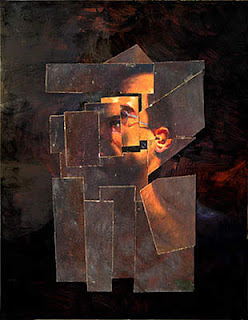 Here's the thing about torture: it's a perversion, a caricature, a horrific parody, of reality. It takes the ordinary world in which you and I live and it turns it upside down. In the process, it's not only human beings that get tortured. Intimacy gets tortured too. So does language. Truth. Morality. Democracy. The natural world. Collective memory.
Saturday, June 30, 2007
U.S. Supreme Court Justice Thinks the Scales of Justice Tip in Favor of Torture
 For pity's sake. How much longer will the people of the United States of America continue to tolerate the suited thugs that run their government and the gowned thugs that claim to dispense justice?!*
Friday, June 29, 2007
Torture Awareness Month Ends, and the Movers and Shakers Couldn't Care Less
 Tomorrow is the final day of June, designated by the Torture Abolition and Survivor Support Coalition International and Amnesty International as Torture Awareness Month. Embedded within the month (June 26) was the UN-appointed International Day in Support of Victims and Survivors of Torture.
But there were a few organizations (almost all of them religious) that took Torture Awareness Month with the gravity it deserves. Kudos to organizations such as Pax Christi, Pace e bene, the Presbyterian Church USA, the Santa Clara Council of Churches, and the hundreds of low-end, small box bloggers who remembered and witnessed. You can get a good idea of who they are by googling "torture awareness month." They may be tiny blips on the blogosphere radar screen, but they're keepin' it real.
The Torturer Speaks
"Torture is the most ancient of the fine arts, older than the so-called art of love, and certainly richer and more varied. The art of love is nothing but a dozen positions and a couple of dozen refinements, but torture has a thousand varieties. All animals can couple, but man is the only animal that tortures. The essential ingredient of torture could not be more simple: all you need is a collective, constituted group operating on a man in isolation. The group, as we know, is stronger than the individual, and torture is the first way of proving it. Torture is also the first of the experimental sciences. All it calls for is a pair of bare hands and a gang to hold the patient down and assist in the experiment. Furthermore it is an art which, like all the primitive arts, dance, song, story-telling, poetry, requires nothing but the body. As for the art of love, well, the zones of pleasure are very much fewer than the zones of pain, and pain is more intense and can last much longer. Pleasure is not the opposite of pain; it is a different thing altogether, poorer and more limited."
This excerpt (pp. 299-300) is from the sadly-neglected novel Incognito by Romanian author Petru Dumitriu. Dumitriu, who experienced WWII and the post-war Soviet bloc firsthand, published the novel in 1962. His novel is semi-autobiographical.
The speaker is one Major Bulz, described by the novel's protagonist as "the only torturer I have known at all well." Major Bulz's left hand is deformed: webbed and fused fingers. "He hated the world for having given him a hand like that."
In just a few lines, Dumitriu deftly captures some of the characteristic features of both torture and torturers: the utter simplicity of torture as an "art," the multiple ways to cause pain, the torturer's grudge against the world that fuels his activities in the torture chamber.
Thursday, June 28, 2007
Torture in the News
 Top Story
President Blows Off Students Expressing Concern About Torture
"We do not want America to represent torture. We urge you to do all in your power to stop violations of the human rights of detainees, to cease illegal renditions, and to apply the Geneva Convention to all detainees, including those designated enemy combatants." This from a letter presented to the President on Monday by 50 of the nation's brightest high school seniors. The students, selected as members of this year's national Presidential Scholars, handed the statement to President Bush during a photo op in the East Room. Bush, apparently taken by surprise, glanced through the letter and then dismissed it with the familiar mantra that "the United States does not torture and that we value human rights." (For more on "the United States does not torture," see the bottom story in this segment of Torture in the News.)
Three of the kids explain why they confronted the President in this CNN interview. Wow!
Also in the News
Torture Continues in Nepal, Zimbabwe, and the Ukraine
In a report released Tuesday, Advocacy Forum Nepal, a human rights NGO, announced that the Nepalese Army and Nepalese Maoist rebels are equal opportunity torturers. The AFN has recorded over 1,300 new cases since April 2006. In that same time period, nearly 28% of detainees claim they were tortured, with minors suffering the worse abuse.
According to the Zimbabwe Human Rights Forum, torture is on the upswing for the third straight year in Zimbabwe, with 300 alleged cases occuring so far this year. Along with Angola, Zimbabwe is the only Southern African Development Community (SADC) that refuses to sign the International Convention on Torture. There are 14 nations in the SADC.
You most definitely don't want to be arrested in the Ukraine. According to reports filed by the UN Committee Against Torture, the Council of Europe, and the International Helsinki Federation for Human Rights, Ukrainians are regularly subjected to torture from the moment of their arrest to their subsequent conviction and imprisonment. As detainees, they're tortured to elicit "confessions." As convicted criminals, they're tortured just because guards enjoy ass-kicking.
UK Attorney General Calls for Investigation
Lord Goldsmith, the UK Attorney General who will soon vacate his post, earlier this week called for an inquiry into allegations that British troops stationed in Iraq have tortured detainees. Goldsmith's call comes on the heels of the acquittal of members of the Queen's Lancashire Regiment accused of prisoner abuse.
More Revelations of Cheney's Involvement in Prisoner Abuse
In Part II of their series on the Vice (and I do mean vice) Presidency of Dick Cheney, Barton Gellman and Jo Becker chronicle Cheney's hardline defense of torture in the war on terror that led to the administration's notorious distinction between illegal torture and permissible cruelty in the treatment of detainees.
(Hat tip to Kim)
Wednesday, June 27, 2007
Bloggers on Torture: Volume 2
 Dr. James Benjamin at a fantastic blog called The Left End of the Dial V2.0 offers an equally fantastic post entitled Torture: A Tentative Definition and Outline of Causative Factors. The post is an abbreviation of a longer scholarly article that's currently in press.


